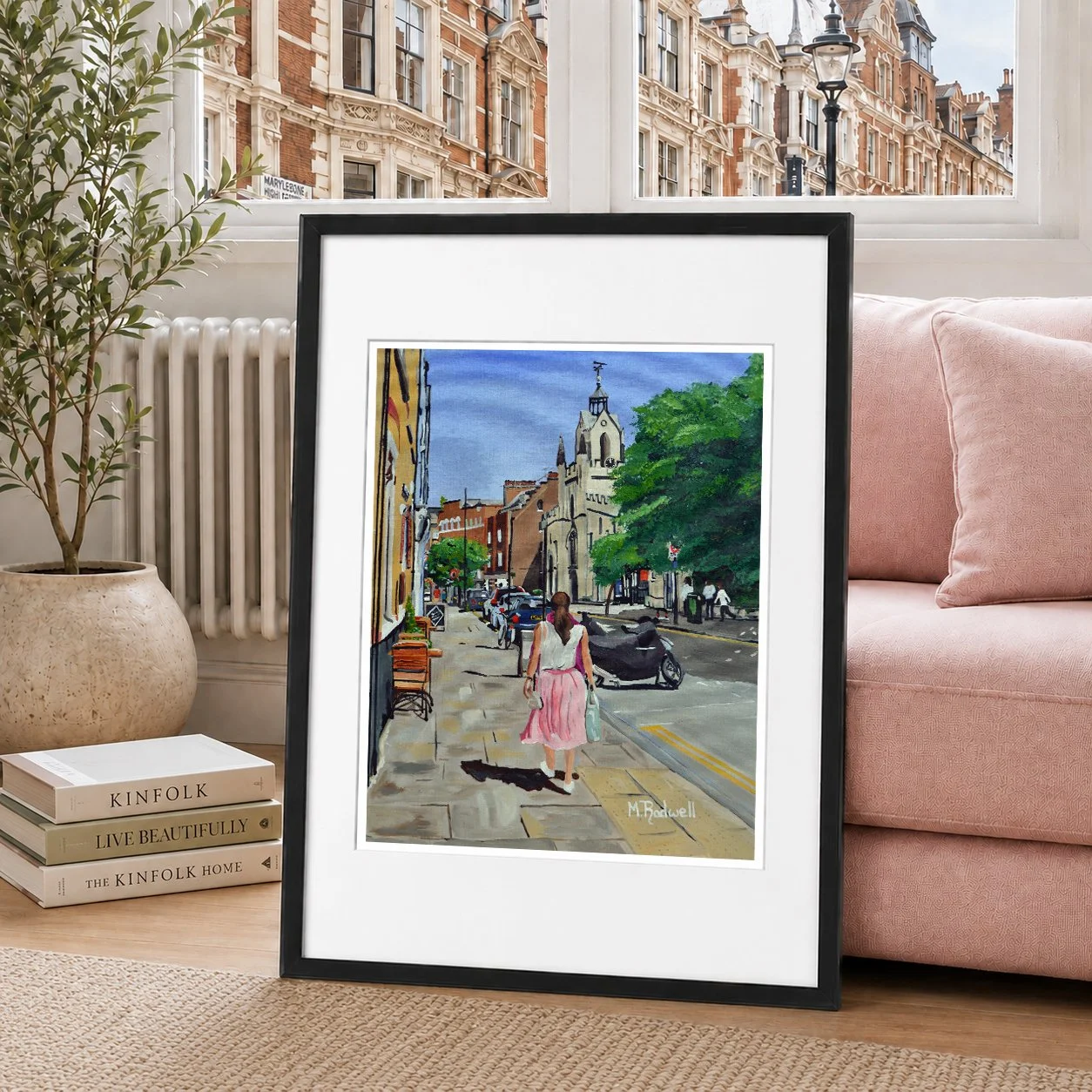
Bermondsey Lady, Flower and Grape on your left and Mary Magdalene Church on your right.
When I first moved to London in 1997, Bermondsey Street was a very different place.
At the time, I worked in the City of London and would often find myself walking home in my suit after a day at work. Occasionally my route would take me down Bermondsey Street. To be completely honest, it wasn't somewhere I particularly wanted to linger. The street felt dominated by warehouses and empty buildings. Parts of it seemed neglected and slightly intimidating, especially after dark.
If someone had told me then that it would become one of London's most vibrant and desirable destinations, I probably wouldn't have believed them.
Today, Bermondsey Street is one of the places I most enjoy visiting.
The transformation has been remarkable. Independent shops, galleries, restaurants and creative businesses have brought the street to life. It has developed its own personality and attracts an eclectic mix of local residents, visitors, food lovers, artists and curious explorers.
For many people, Bermondsey Street isn't simply somewhere to pass through. It's somewhere they create memories.
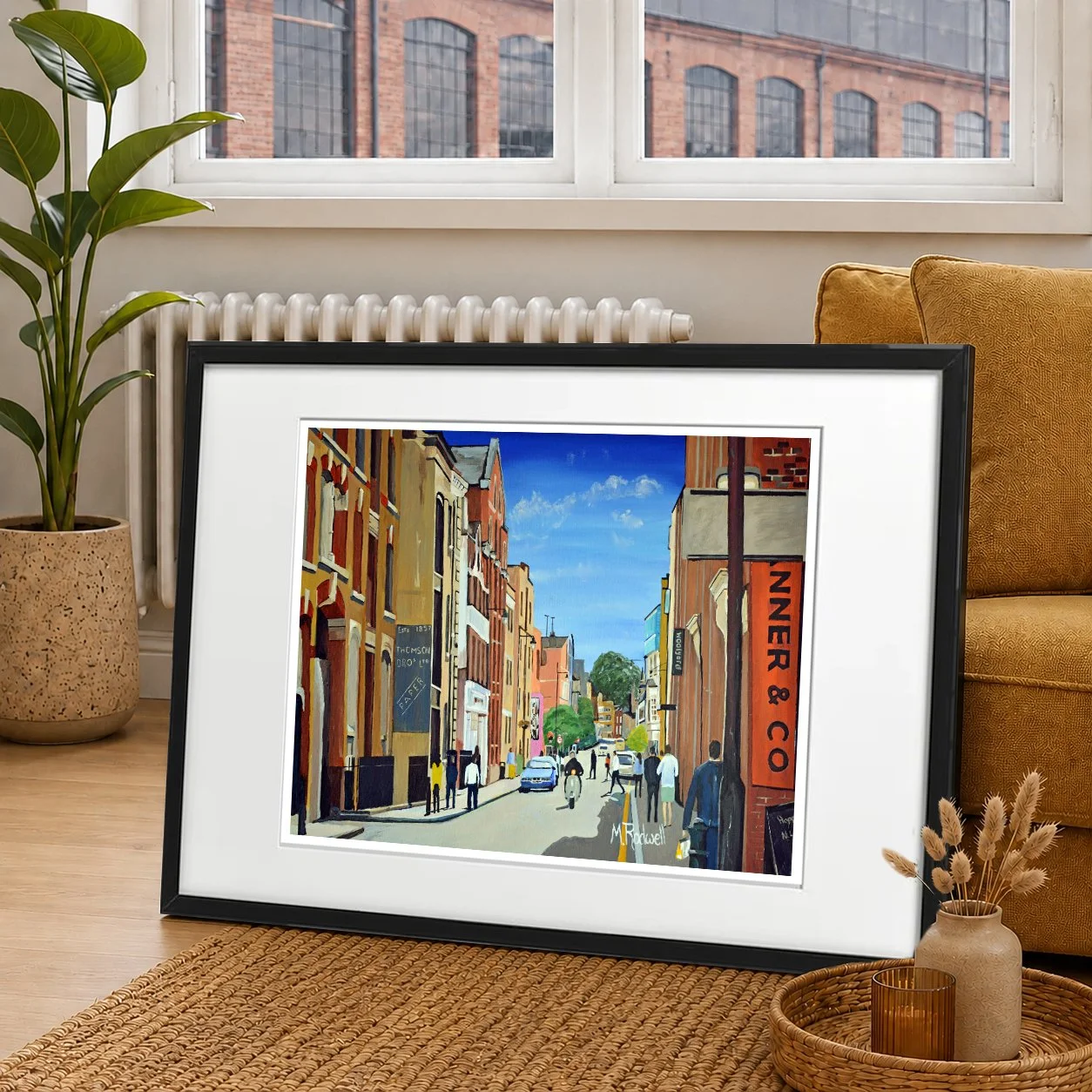
Bermondsey Street looking towards the FTM building on the left.
A Street Shaped by Industry and Resilience
Long before Bermondsey Street became known for galleries, restaurants and independent businesses, it was a place of industry.
For centuries, Bermondsey was at the heart of London's leather and tanning trade. Tanneries occupied much of the area, processing animal hides and supplying leather goods across the capital and beyond. It was hard, physical work, and the distinctive smell of the tanning process was once said to drift across the neighbourhood.
Even today, reminders of this heritage survive in local street names and landmarks. Tanner Street, Leathermarket Street and the historic Leather Market all tell the story of an area that once played a vital role in London's economy.
Life in Victorian Bermondsey could also be challenging. Poverty was widespread and the neighbourhood became associated with many of the social issues that inspired writers such as Charles Dickens. Nearby stood the Bermondsey Workhouse, once located close to what is now Tanner Street Park. The workhouse offered shelter for the poor, although under conditions that would seem harsh by modern standards.
It's fascinating to think that the same neighbourhood that now attracts food lovers, artists and tourists from around the world was once a place of heavy industry and hardship.
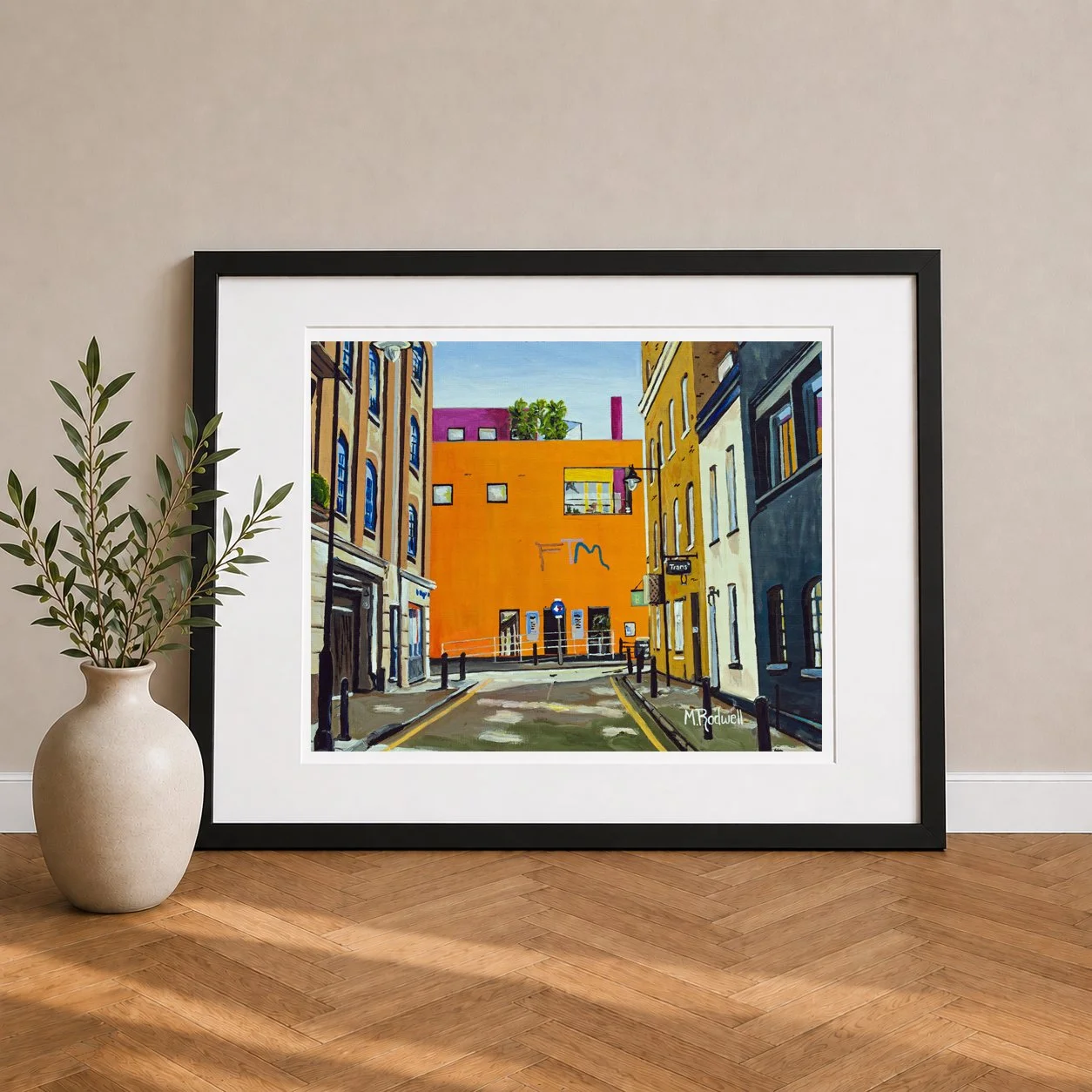
Fashion Textile Museum - Fashion Museum on Bermondsey Street.
A Street Full of Experiences
One of the things that makes Bermondsey Street so special is the variety of experiences packed into a relatively short stretch of road.
Art lovers can spend an afternoon exploring exhibitions at White Cube before wandering further along the street in search of lunch. You can also find a limited range of my own colour prints in located in Estella Bartlett and black and white prints in Trove 167 gift shop.
The Fashion and Textile Museum, with its wonderfully bold and colourful exterior, continues to attract visitors interested in design, fashion and creativity. Founded by the legendary designer Zandra Rhodes, it has become one of the area's most recognisable landmarks.
For something a little different, London Glassblowing offers visitors the chance to watch skilled craftsmen transform molten glass into beautiful works of art. If you're lucky enough to secure a place on one of their workshops, you can even try glassblowing yourself. In fact, I often think a glassblowing lesson would make a fantastic date. Imagine creating something together and then later hanging a piece of artwork on your wall that reminds you of that experience.
Of course, no discussion of Bermondsey Street would be complete without mentioning the food.
Over the years, the street has become a destination for food lovers. Whether it's tapas at José Pizarro's, Vietnamese cuisine at Café East, a relaxed wine bar Bermondsey Corner, artisan coffee European Bermondsey Street Deli with friends, French cuisine Casse Croute or one of the many independent restaurants that line the street, there is always something new to discover. I should mention there are many more quality restaurants and cafes on the street, and this is just an example of what you can find. One of the joys of Bermondsey Street is that no two visits are ever quite the same.
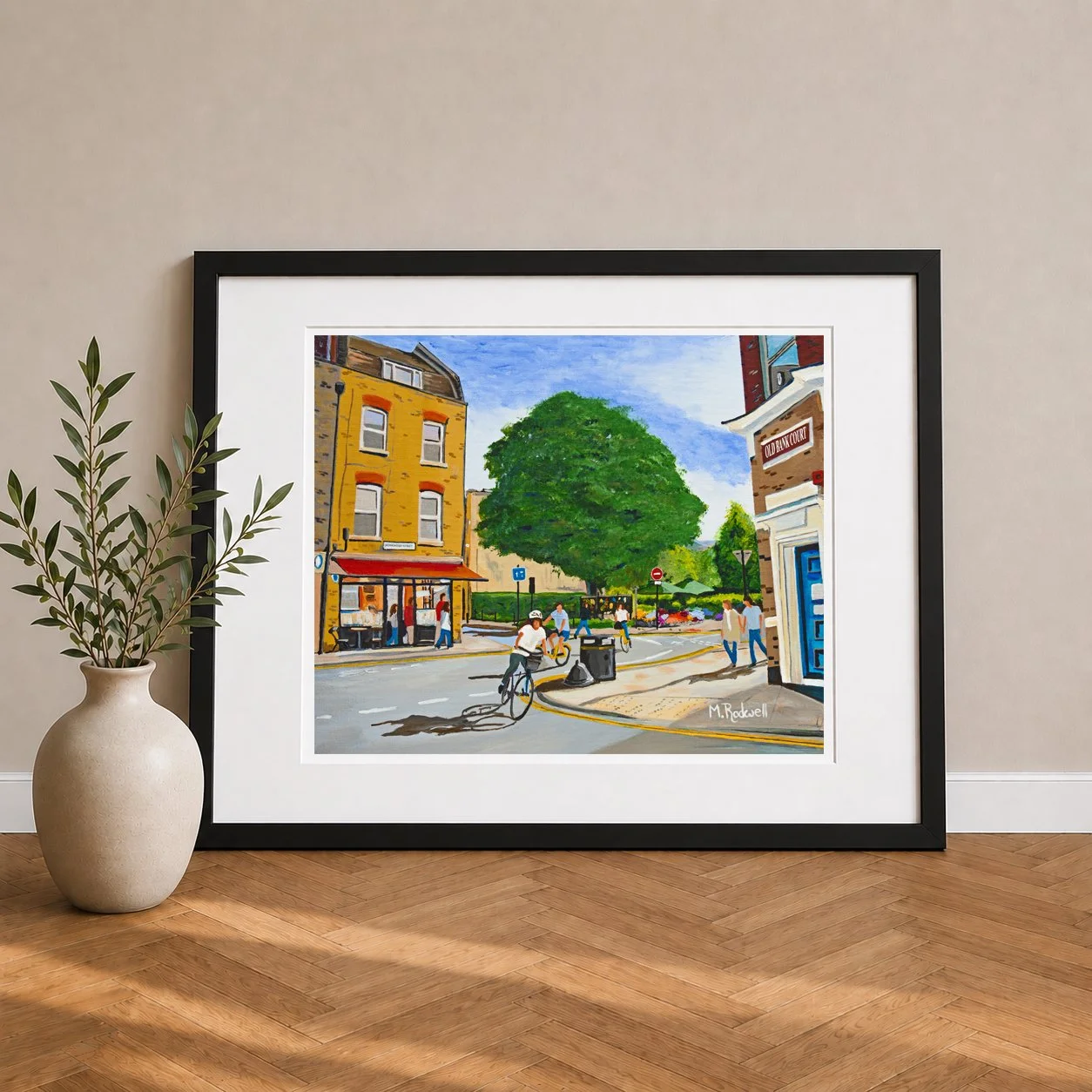
Casse Croute and Tanner Park Bermondsey Street.
A Street That Never Stands Still
One reason I enjoy painting Bermondsey Street is that it is constantly changing.
Businesses come and go. Shopfronts change colour. New restaurants open. Familiar venues evolve. Even some of the physical features of the street have changed over the years. Trees have disappeared, cycle lanes have appeared and the neighbourhood continues to reinvent itself with the support of its residence.
There are certainly far more visitors than when I first arrived in London. Some are tourists exploring beyond the obvious local attractions, while others are local residents returning to favourite restaurants, galleries and cafés.
Yet despite all these changes, Bermondsey Street has managed to retain something important: its sense of character. It still feels like a neighbourhood rather than a tourist attraction. That said it’s very close to all the larger tourist attractions like Tower Bridge and the HMS Belfast which are just a 10 minute walk away.
Spend enough time there and you'll start to recognise familiar faces. The shop staff, restaurant owners, café teams and local residents all contribute to the atmosphere that makes the street feel welcoming and alive. It’s like a village and that’s why I name some of my paintings Bermondsey Village because of this unique feeling one gets exploring the area.
My Perfect Bermondsey Street Afternoon
If a friend came to visit and I had one afternoon to show them Bermondsey Street, I'd probably begin by calling London Glassblowing first thing in the morning to see if there had been any cancellations.
If you're lucky, you can sometimes secure a discounted workshop place at short notice. If not, there's still plenty to see.
I'd then head to the Fashion and Textile Museum or White Cube, depending on what exhibitions were running at the time. Both offer completely different experiences, yet each reflects the creative spirit that has become synonymous with the area.
Afterwards, I'd find somewhere to eat. More often than not, that would be José Pizarro's or Café East. I'm particularly partial to Vietnamese food, so Café East has always been a favourite.
The beauty of Bermondsey Street is that you can spend hours there without ever feeling rushed.
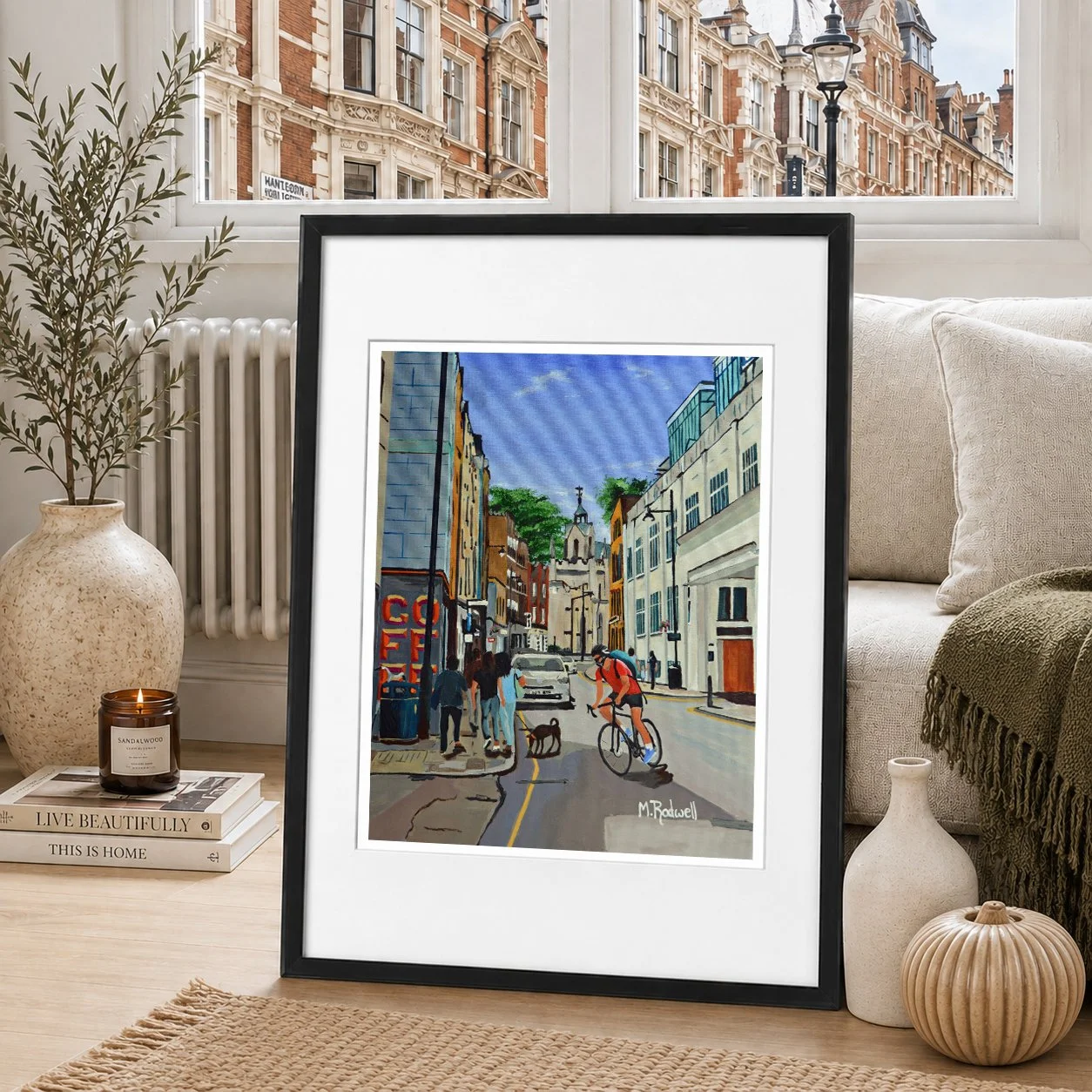
Bermondsey Street, looking onto FuckOffee Café and Mary Magdalen Church.
My Favourite View
As an artist, people often ask if I have a favourite view of Bermondsey Street.
One scene I return to time and time again is the view looking towards St Mary Magdalen Church from near FuckOffee Cafe.
The church tower creates a wonderful focal point, framed by colourful shopfronts, independent businesses and the energy of everyday life. It perfectly captures the character of the street.
That said, almost every section of Bermondsey Street offers something worth painting. The changing architecture, mixture of old and new buildings and variety of colours make it a feast for the eyes.
The Hidden Gem Most Visitors Miss
If there is one place close to Bermondsey Street that deserves more attention, it is St Saviour's Dock.
Tucked away from the crowds, it feels like a hidden corner of old London.
The dock is often associated with Charles Dickens and the darker side of Victorian London. It is said to have inspired elements of Oliver Twist, particularly the area linked with the character Bill Sikes. Whether you visit for the history, the architecture or simply the peaceful atmosphere, it remains one of the most fascinating locations in the neighbourhood.
Whenever I visit, it feels like stepping into a different world.
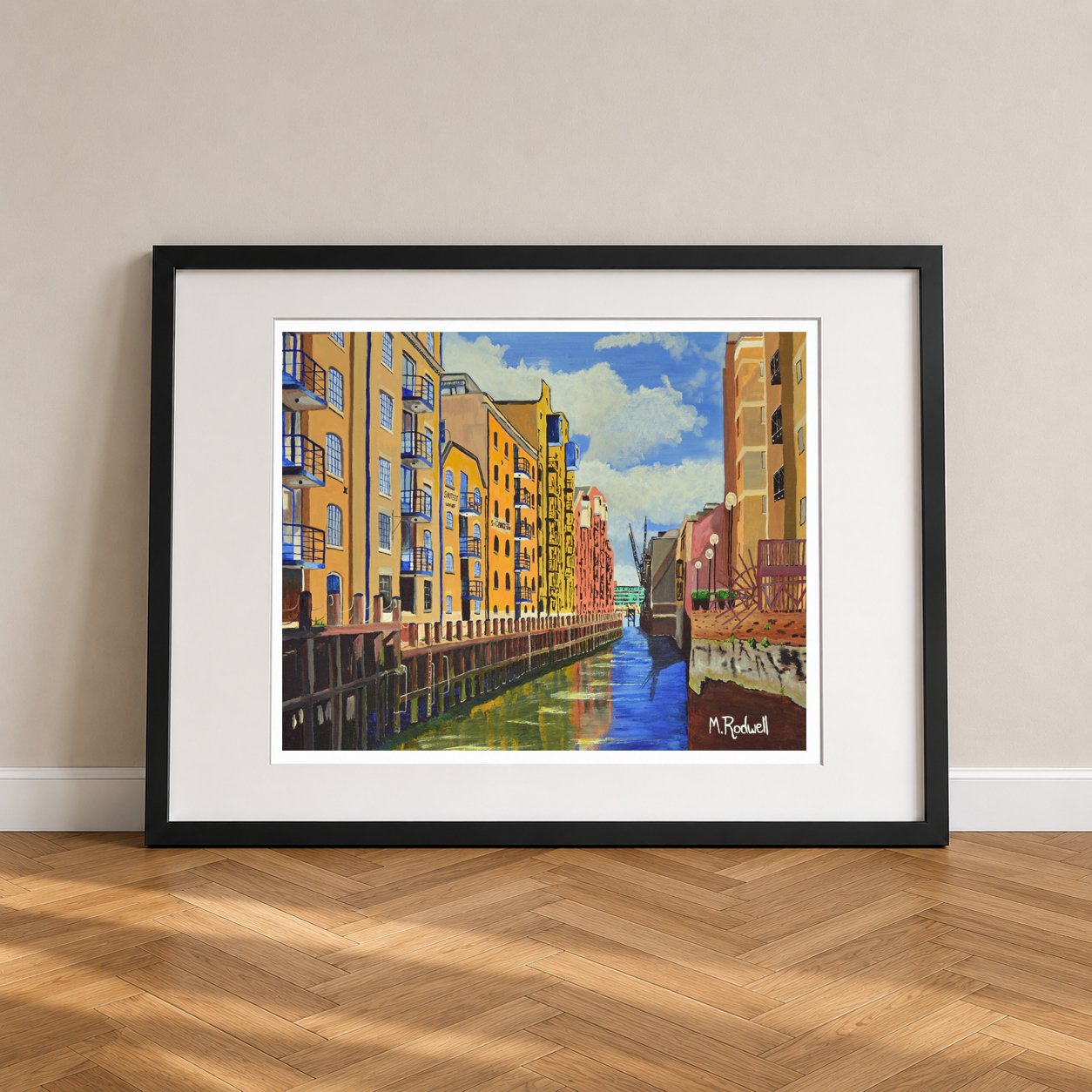
St Saviours Dock, Shad Thames a 10 minutes walk away from Bermondsey Street on the Thames.
Why People Buy Bermondsey Street Artwork
Over the years, I've often wondered why people are drawn to artwork of Bermondsey Street.
Sometimes it's because they once lived nearby. Many residents only stay for a year or two before moving elsewhere to start a family, but often develop a strong connection to the area during that time.
Others worked nearby and remember lunch breaks, after-work drinks or daily walks through the neighbourhood.
For some, Bermondsey Street reminds them of a favourite restaurant, a special occasion, a first date or a memorable day spent exploring London.
The artwork becomes a reminder of those moments.
I've had customers tell me they wanted to remember their first London home, celebrate a chapter of their lives spent in SE1, or give a gift to someone who had fallen in love with the neighbourhood.
That's what makes local artwork so powerful. It captures more than a location. It captures a story.
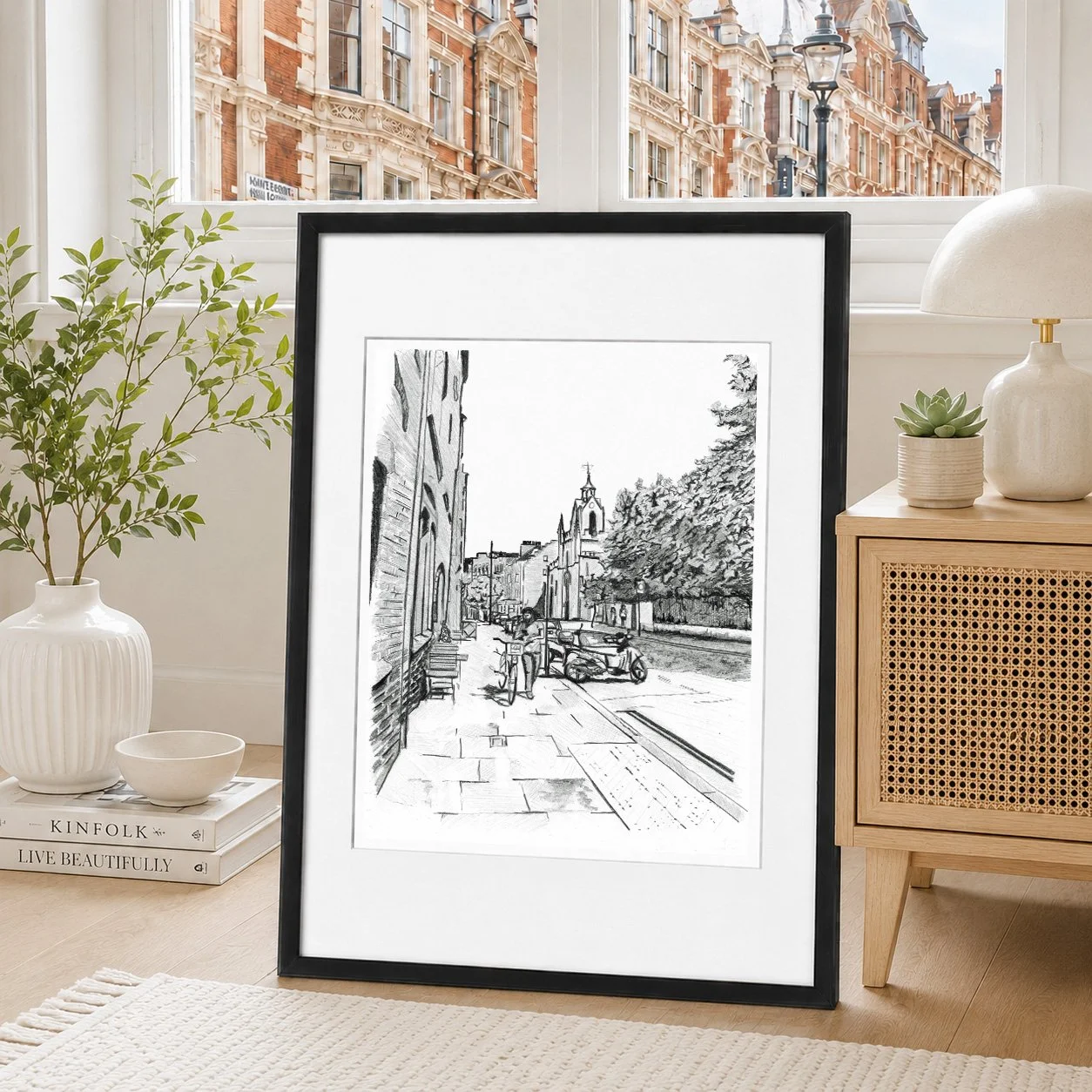
Pencil drawing of Bermondsey Street looking onto Mary Magdalene Church, with a man walking his bicycle.
More Than a Street
The best places evolve, but somehow manage to remain true to themselves.
Bermondsey Street has travelled a remarkable journey from its industrial roots of tanneries and warehouses to become one of London's most creative and vibrant destinations.
Yet what makes it special isn't simply the galleries, restaurants or museums.
It's the memories people create there.
For some, Bermondsey Street is where they discovered a favourite exhibition. For others, it's where they enjoyed a memorable meal, celebrated an important occasion or simply spent an afternoon exploring one of London's most characterful neighbourhoods.
And for those of us who have watched its transformation over the decades, it remains one of the most fascinating streets in London.
Perhaps that's why people continue to take a piece of Bermondsey Street home with them.