
Highgate Village Art Prints & North London Village Memories
Highgate is one of London’s most atmospheric and architecturally distinctive neighbourhoods, known for its elevated streets, historic village feel and beautiful views across the city. With its winding roads, elegant houses and quiet sense of old London character, the area feels removed from the pace of central London while still remaining deeply connected to the city itself.
Although I had driven through Highgate many times over the years, I realised I had never truly explored it properly on foot. Like many parts of London, it had existed in my mind more through glimpses from bus windows and passing journeys rather than through personal experience. Eventually, I decided to take the bus there specifically to spend time exploring the area and searching for scenes that emotionally connected with me as an artist.
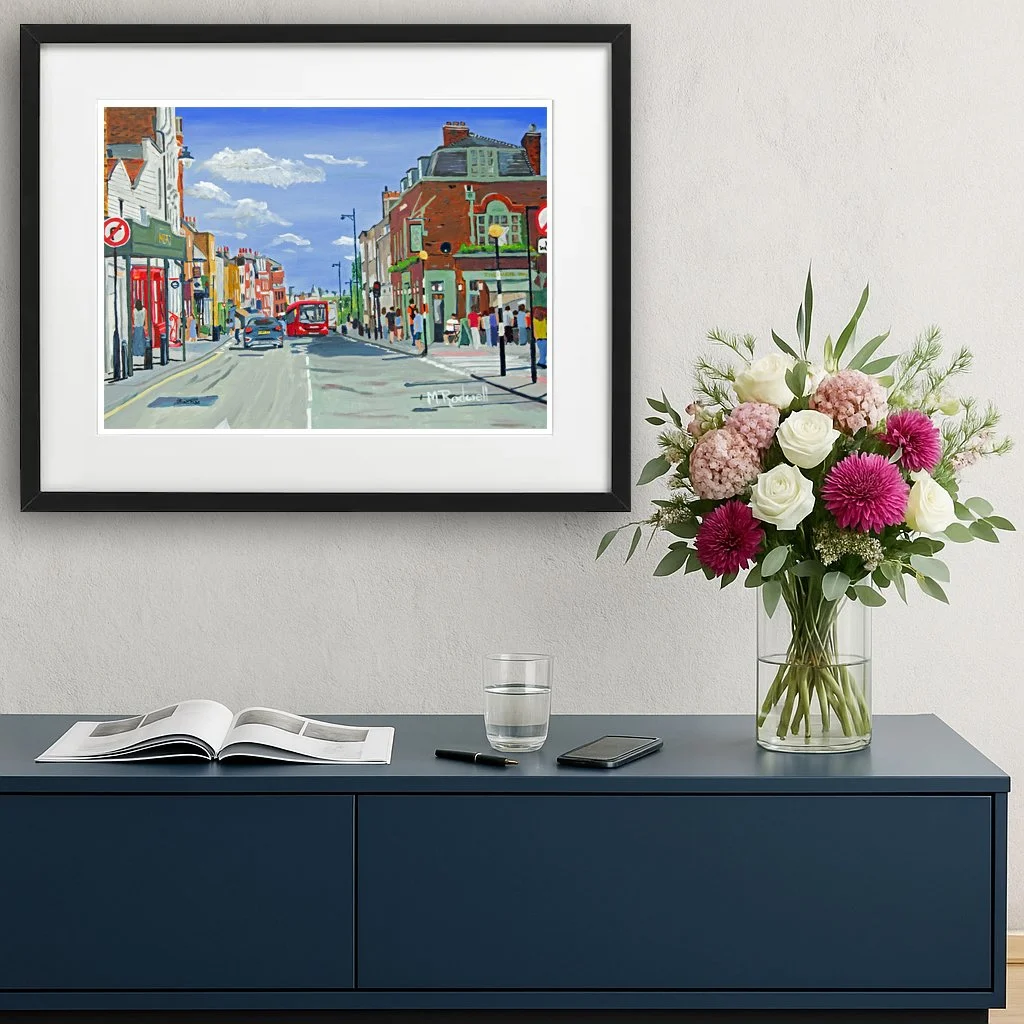
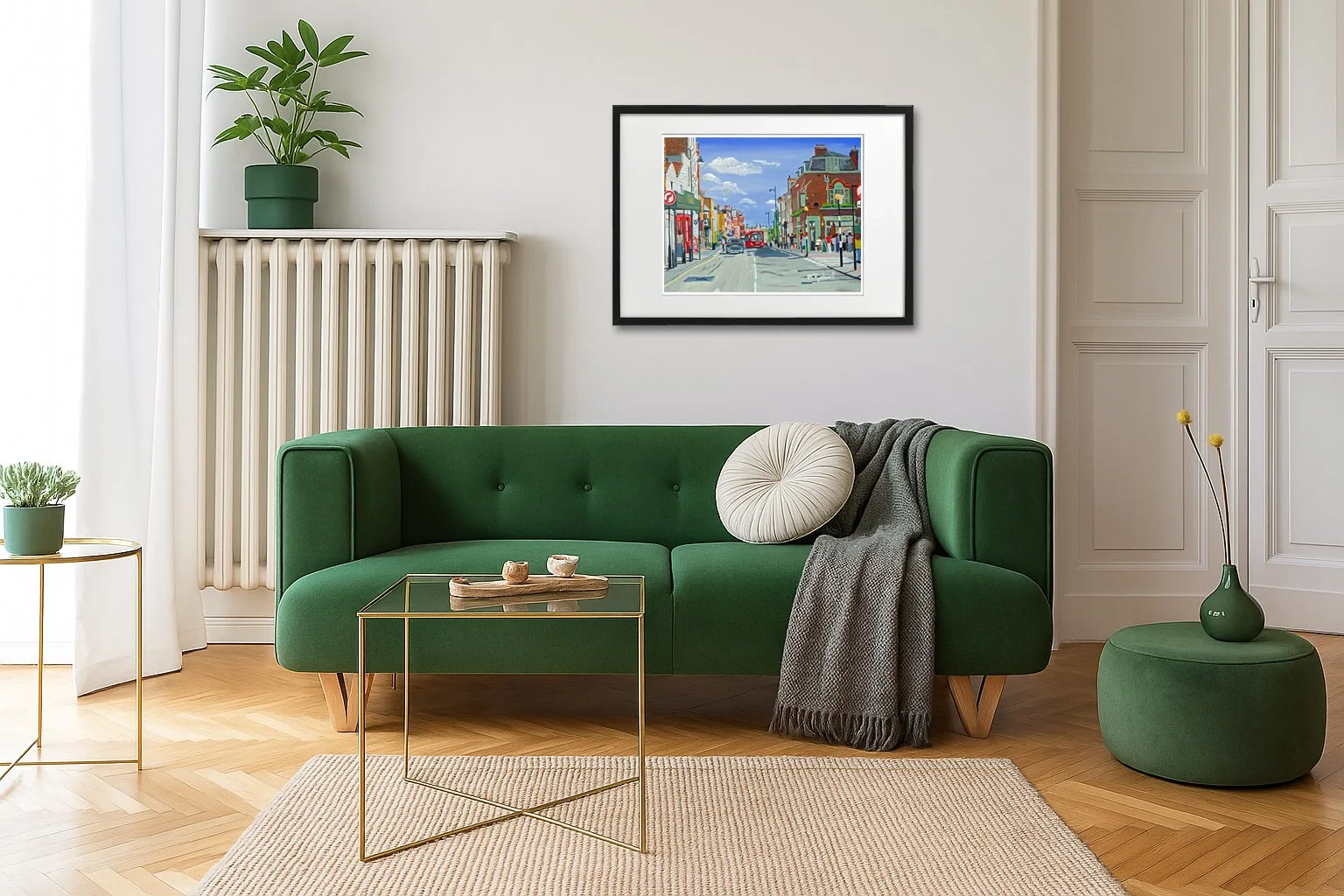
What immediately stood out to me was the strong sense of village atmosphere and architectural identity throughout the neighbourhood. Two particular scenes especially stayed in my mind. The first was Highgate High Street itself, which immediately felt like the heart of the community — filled with cafés, independent shops and people quietly going about their daily lives. There was a calmness and elegance to the area that felt very different from the busier parts of London I often paint…..

Perfect to Gift
Many customers choose Highgate artwork as meaningful gifts connected to North London memories, favourite neighbourhoods and timeless London architecture. Handwritten personalised messages are also available on request.
Discover Highgate Village Prints, North London Artwork & Original Paintings
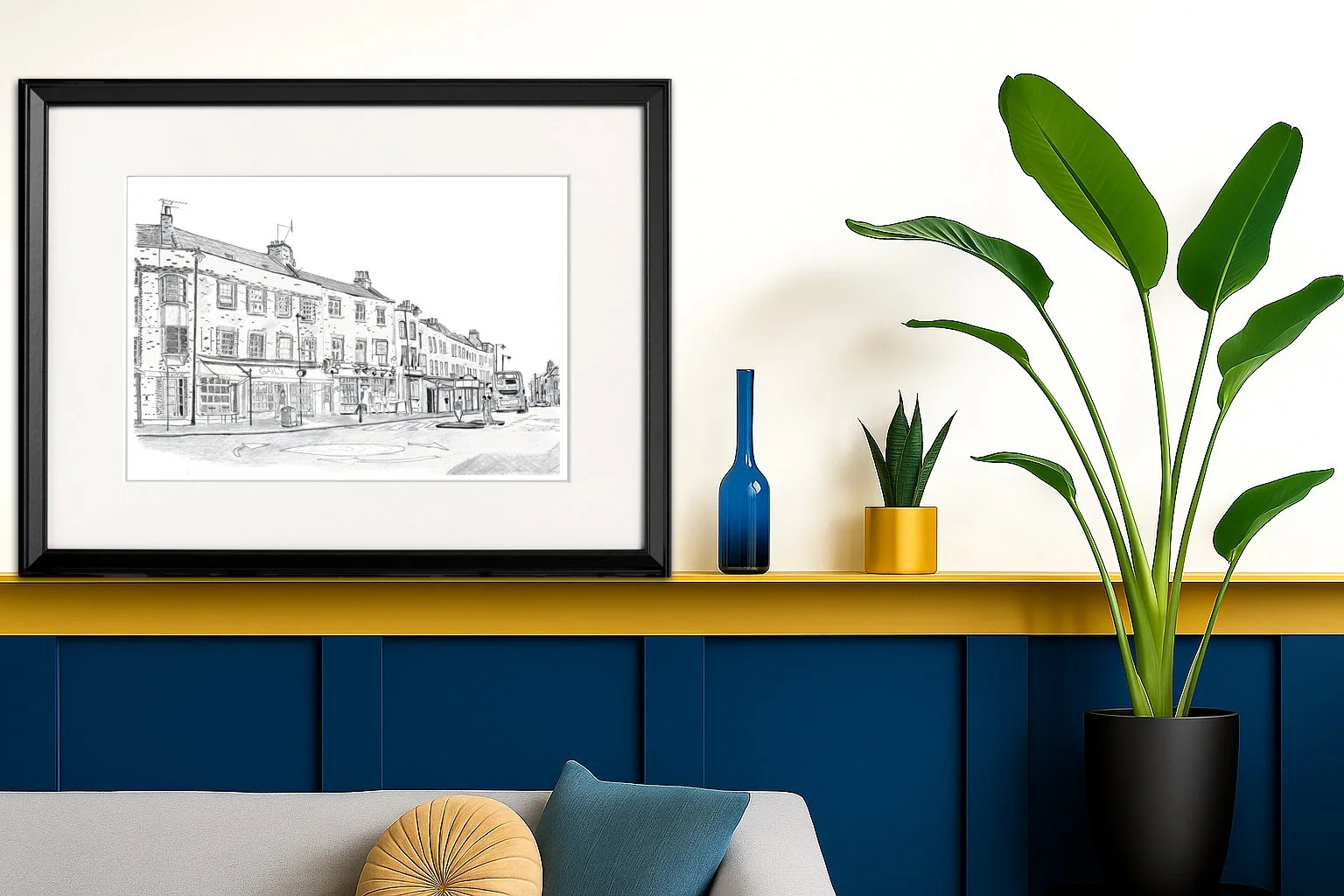
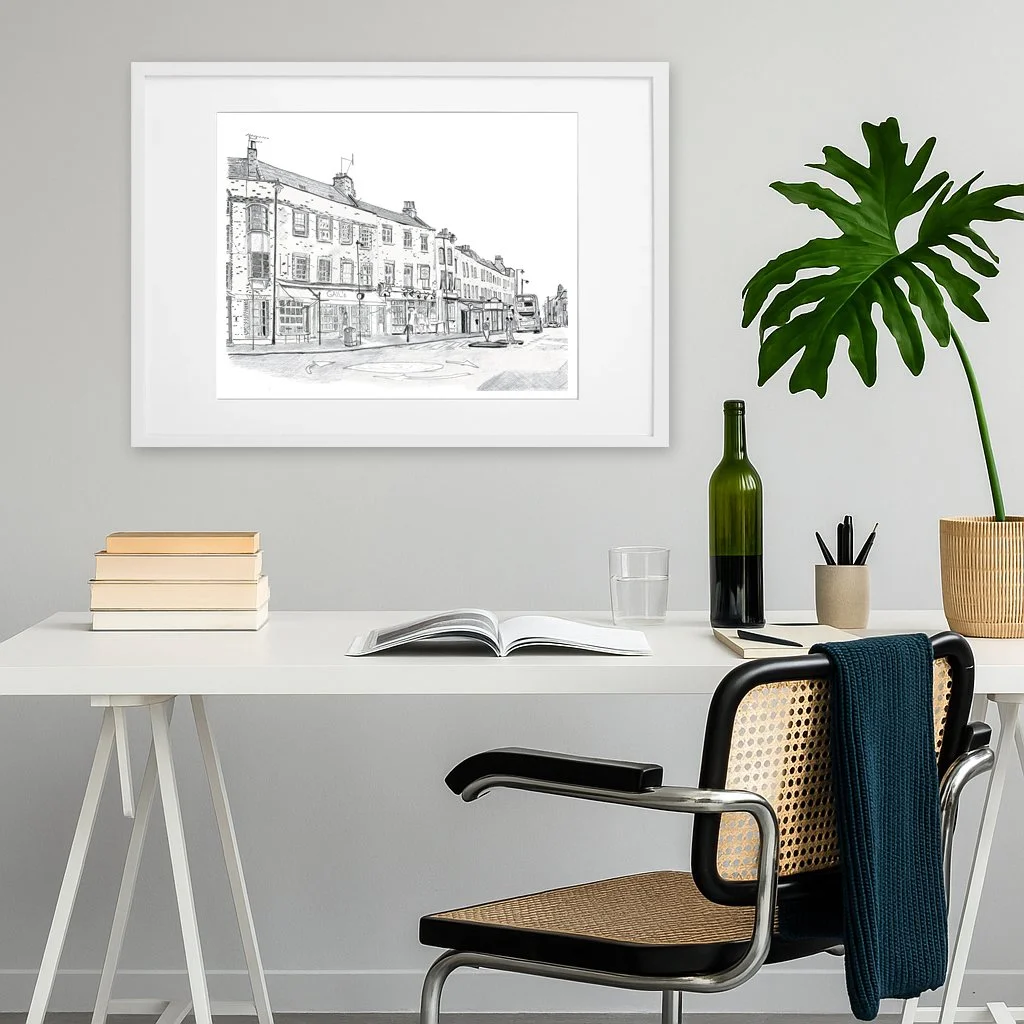
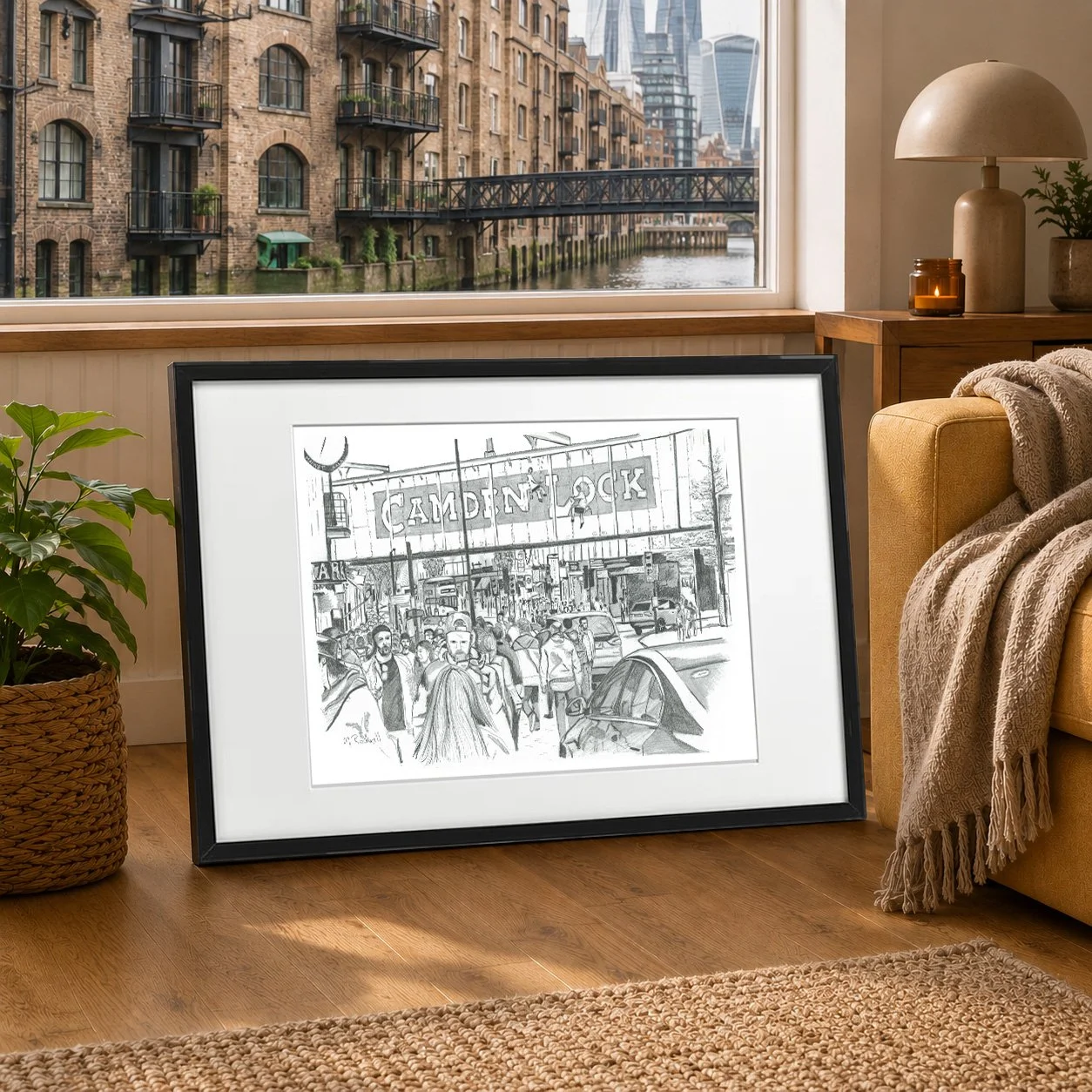
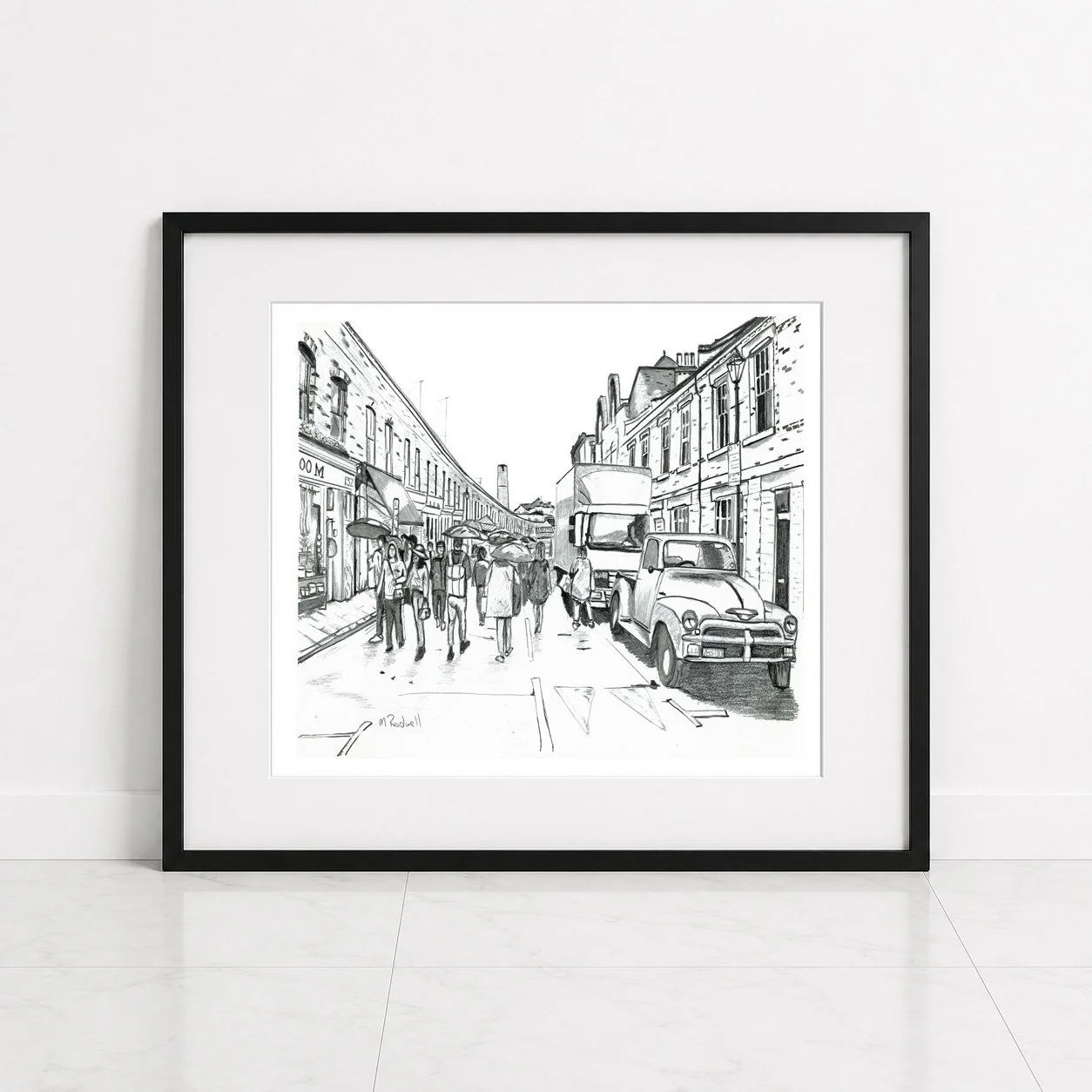
Explore the collection including: Highgate art prints; Highgate Hill illustrations; Highgate Village artwork; North London street scenes; London architecture pencil drawings; Limited edition London prints and Original impressionist London paintings
Giclee limited edition London prints | Signed by the artist | Embossed

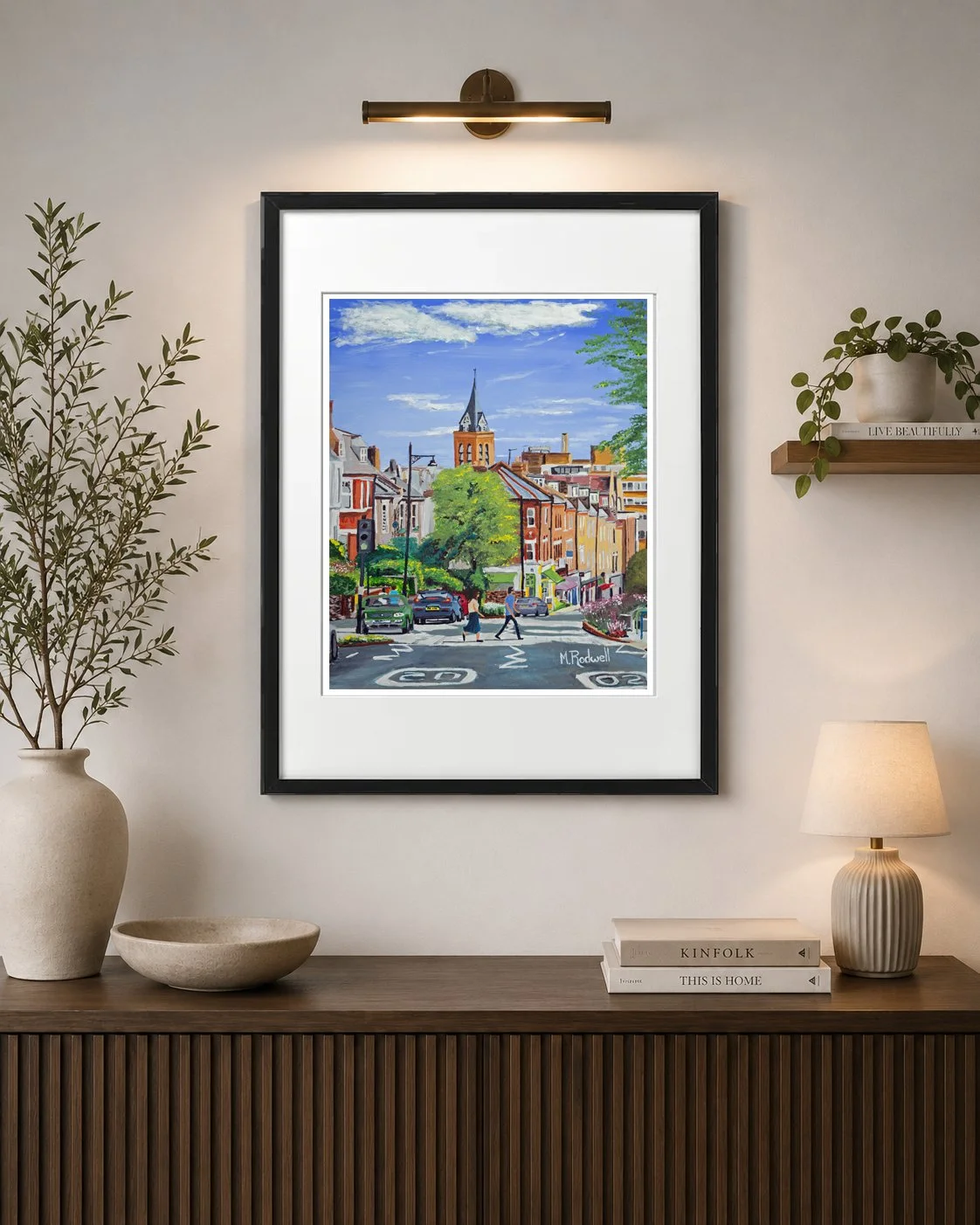
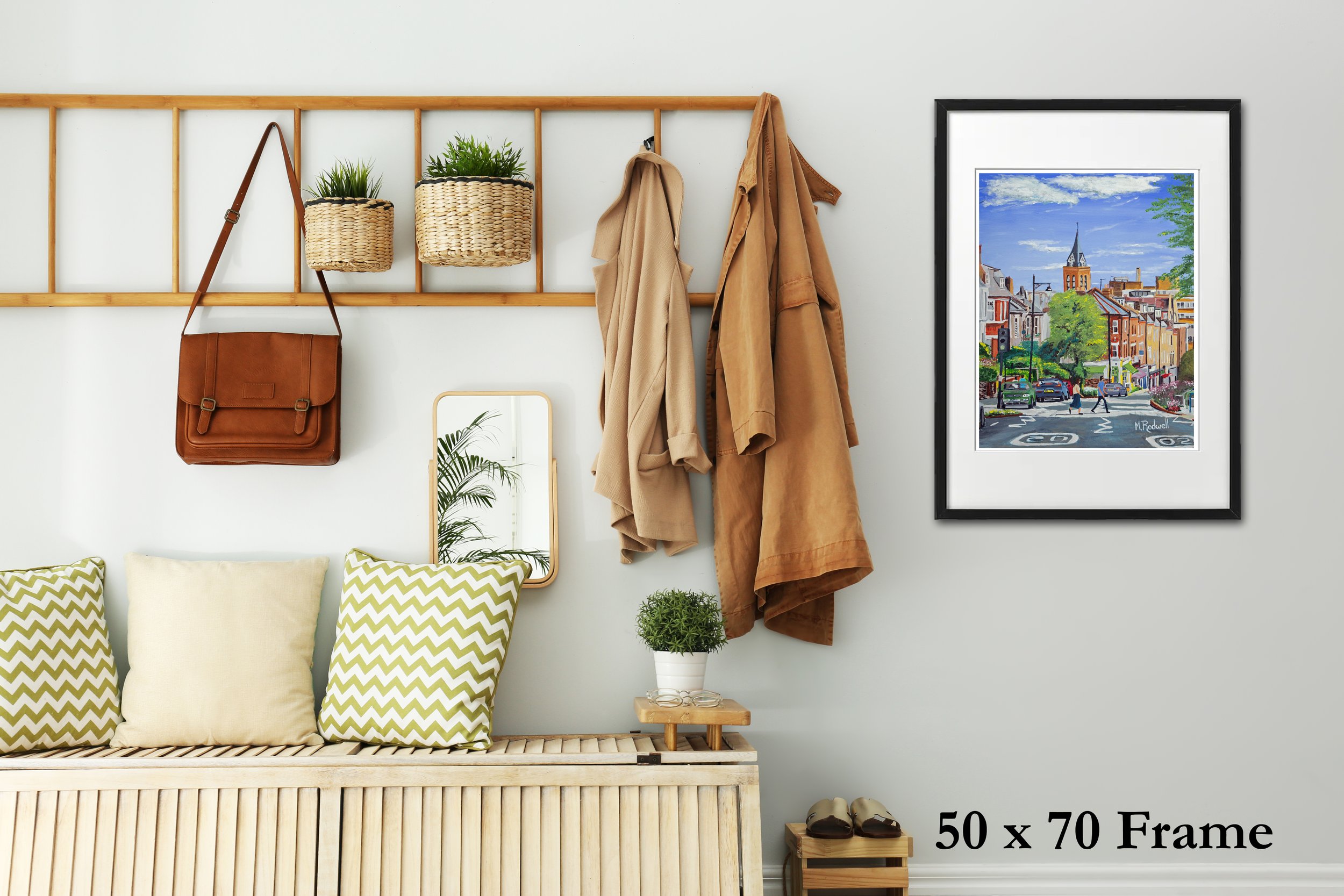
The second scene that particularly inspired me was Highgate Hill. Standing there and looking down the slope of the street, the eye naturally follows the line of the terraced buildings descending towards the distance. Along the way, the architecture changes rhythmically between houses, shopfronts and eventually the striking spire of a church emerging further down the hill. Beyond that sits one of the local colleges, quietly anchoring the scene and adding to the layered architectural feel of the neighbourhood.
For me, that composition perfectly captured the character of Highgate. As an artist, I’m always searching for scenes where the perspective naturally draws the eye through the environment, allowing the architecture and atmosphere to guide the viewer through the painting or drawing itself. Highgate Hill immediately created that feeling for me — almost cinematic in the way the street unfolds gradually towards the horizon. Although I would never claim to know Highgate as deeply as some other areas of London, I think there is something exciting about discovering a location with fresh eyes and responding instinctively to what visually and emotionally stands out in the moment.
For me, Highgate represents discovery, architecture and timeless London character. It is a place where the streets still feel connected to an older rhythm of London life, where the buildings quietly tell stories through their design and where the village atmosphere remains deeply rooted within the neighbourhood itself. That emotional connection is what I hope people feel when they bring one of my Highgate art prints or original London paintings into their home.
For some collectors, the artwork reflects memories of living in North London, walking through Highgate Village or admiring the views and architecture of the area. For others, it represents a quieter and more reflective side of London — where history, perspective and atmosphere still shape the streets in a timeless way.
This collection of impressionist London artwork and pencil drawings celebrates Highgate not simply as a location, but as a place where architecture, village life and discovery continue to inspire the people who experience it.
By Magnus Rodwell
Giclee London pencil prints | Signed by the artist | Embossed

Bring Memories of Highgate Village Home
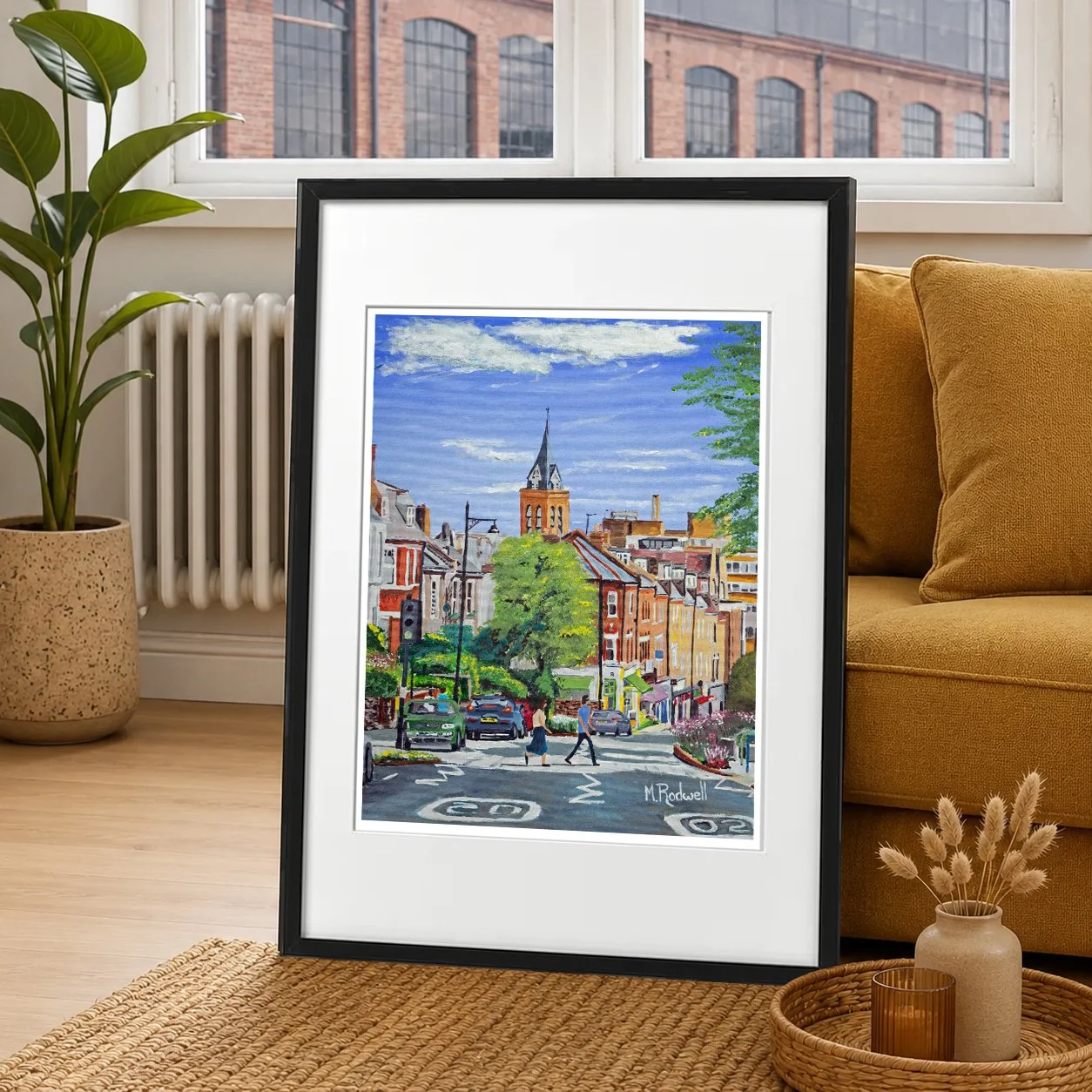
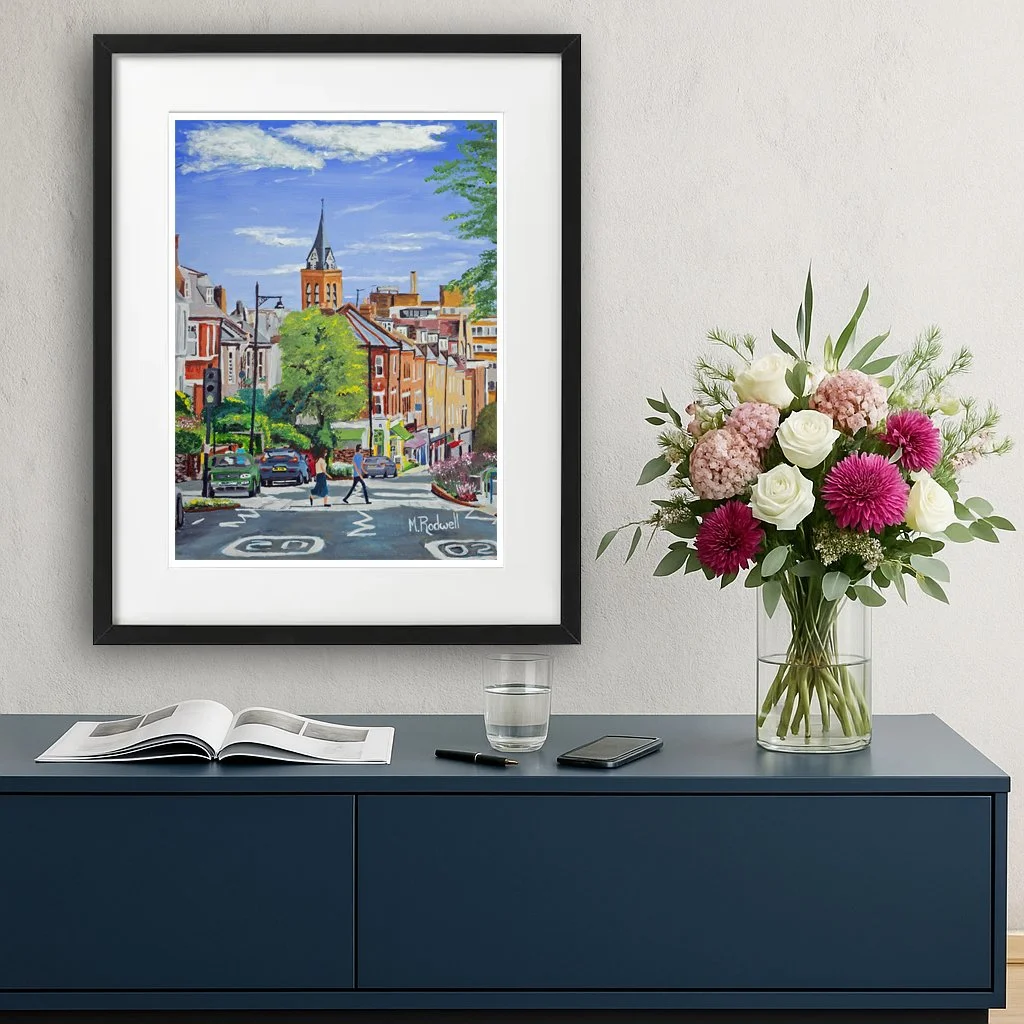
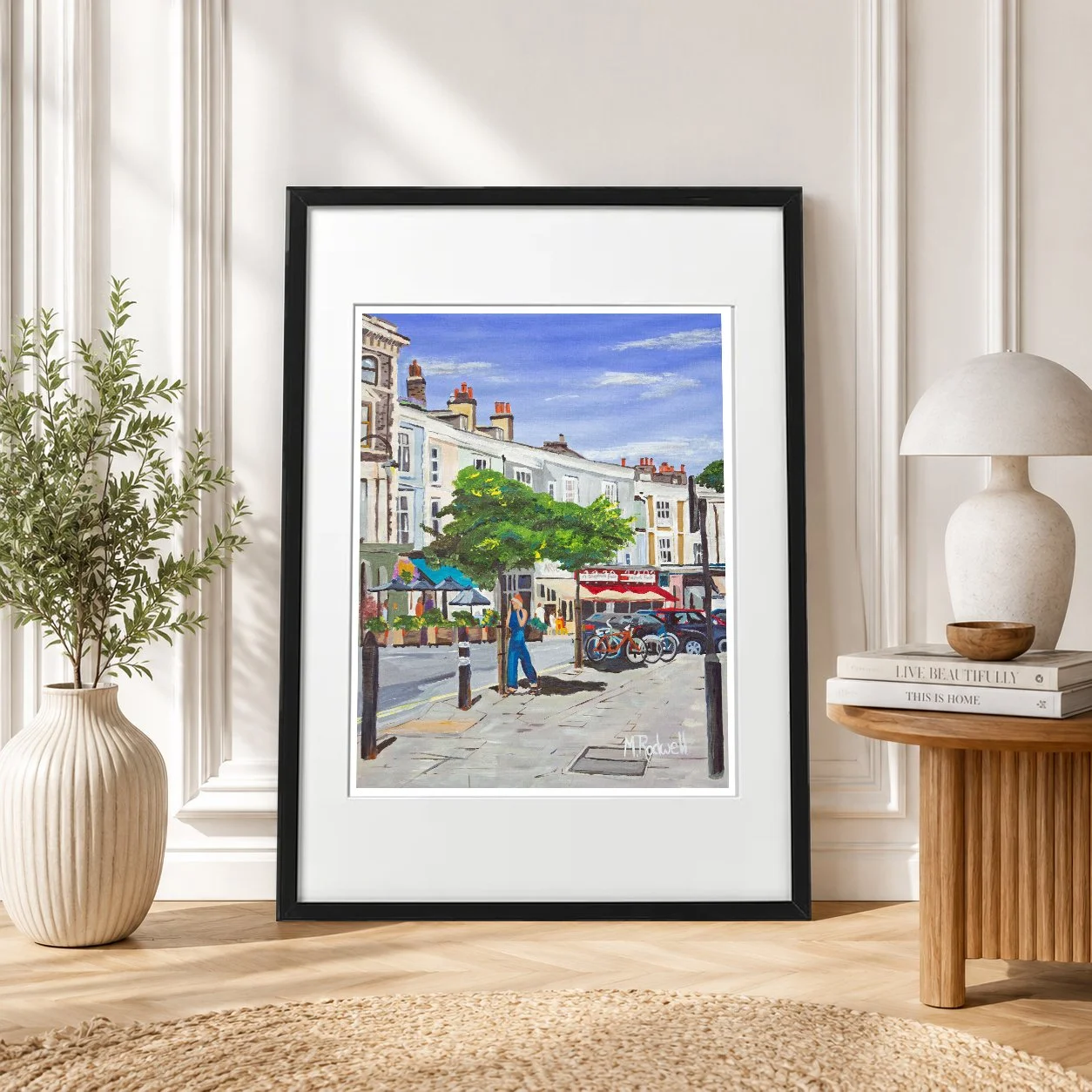
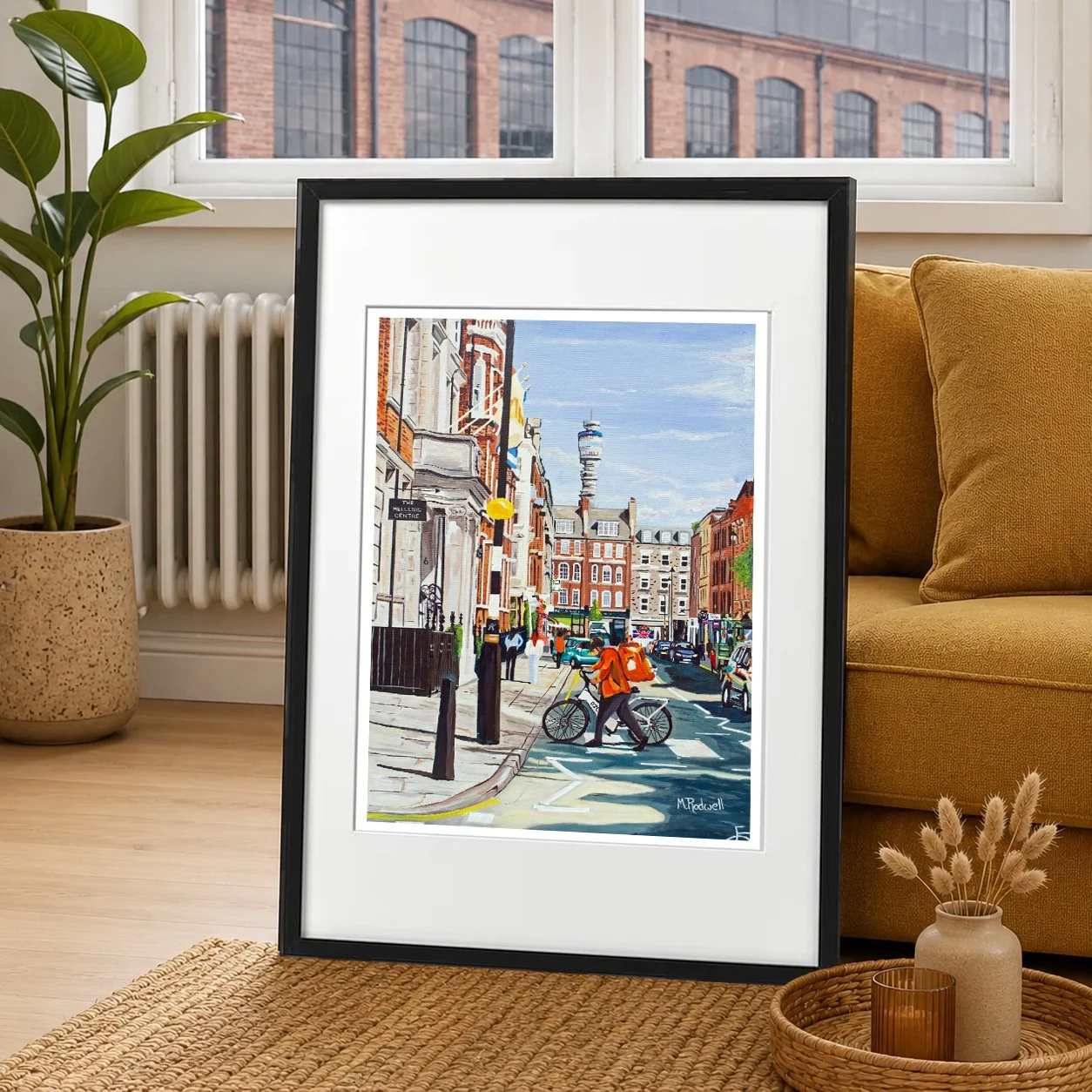
Highgate | Perfect Keepsake Gift
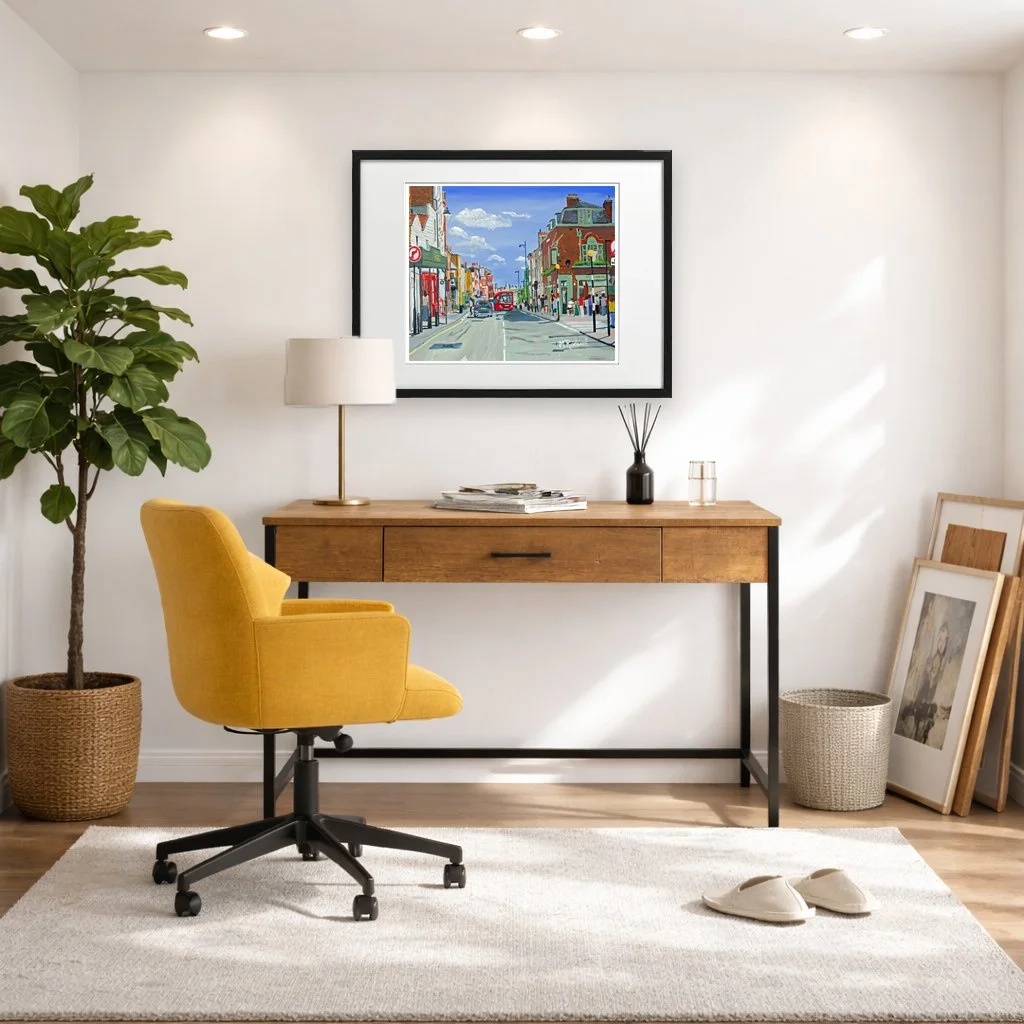
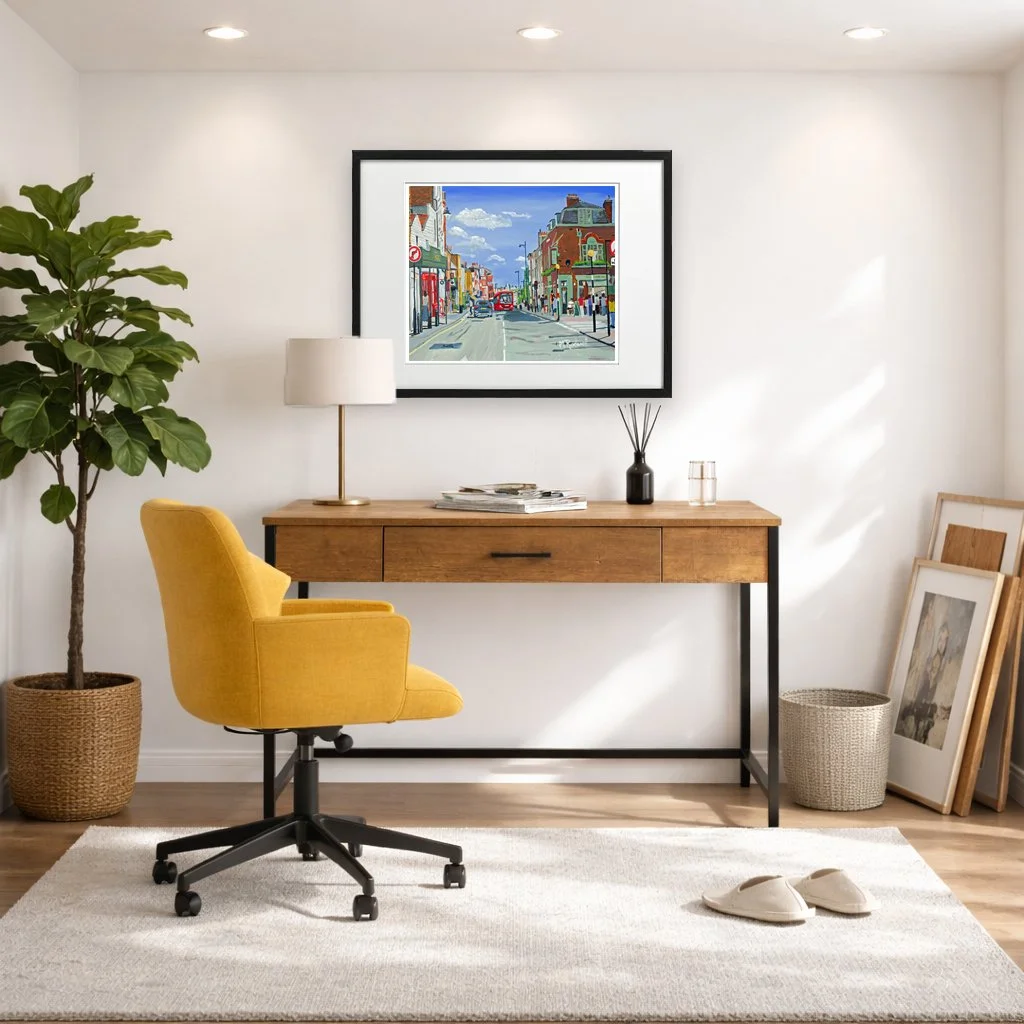
This vibrant acrylic painting captures the charm and character of Highgate High Street — a lively stretch where independent shops, cosy pubs, and the occasional high-street chain like Cafè Nero blend together in a uniquely North London rhythm. Looking down toward the City of London, the composition draws the eye through the heart of the village, where local life unfolds.
In the foreground, you’ll spot The Angel pub, a much-loved local with regulars gathered outside, pint in hand, basking in the summer sunshine. It’s a celebration of community, familiar faces, and the timeless ritual of a weekend well spent.
Highgate has long been a magnet for creatives — famously home to the likes of Jamie Oliver and Jude Law — and it’s easy to see why. Though famously hilly, the neighbourhood rewards with stunning views and a sense of peaceful separation from the city’s buzz.
This limited edition print makes a wonderful gift or personal keepsake for anyone who’s lived in, loved, or simply admired this stylish corner of North London.
Description
Material:
We use 330gram 100% Cotton acid free Somerset Enhanced Velvet paper.
Delivery to UK:
We take max of 1-2 days to prepare our products for delivery. Limited edition prints are sent via Courier or Royal Mail
Delivery to EU/Non EU Countries:
We take max of 1-2 days to prepare our products for delivery. Limited edition prints are sent via Courier or Royal Mail . Overseas customers are responsible for any fees, taxes and duties associated with shipping to their respective countries. * See terms page for full details
Packaging:
Prints are sent in sturdy postal tubes, ideal for the world postal service.
Framed prints come in sturdy cardboard boxes, purpose built for frames and ideal for the world postal service.
Features:
This Tower Bridge print has a narrative written in pen identifying the location, limited edition print number, embossed and personally signed by the artist.
Portrait 40 cm x 50 cm unframed
Framed 40 cm x 50 cm
Framed 50cm x 70 cm. Narrative written in pencil, limited edition print number embossed and signed by the artist. Print number consecutive of 40x50 prints.
Made in England.